
Moving out? What really happens to everything you leave behind
Every move leaves a pile behind — and England logged 1.26 million fly-tips last year, most of it ordinary household stuff. Here’s how licensed clearance works when you’re moving: volume-based prices for 2026, the two-minute licence check, and where your unwanted furniture actually ends up.
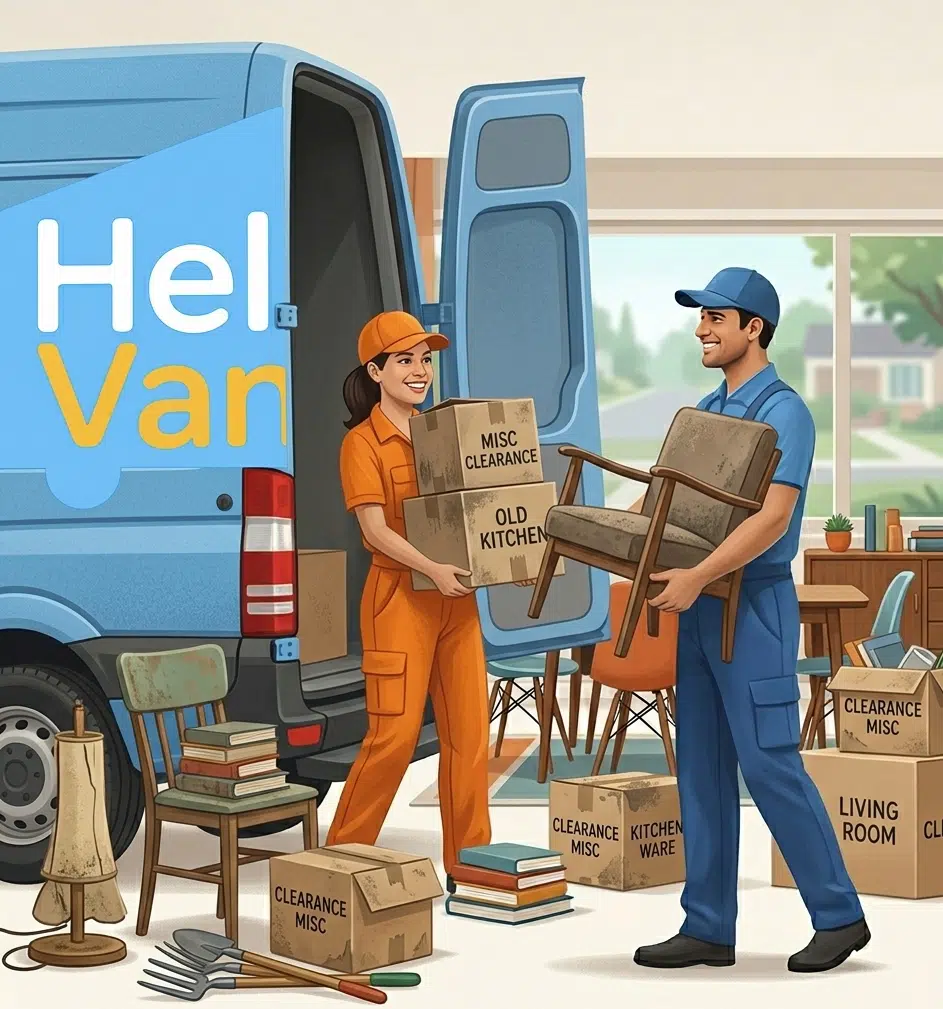
Moving day has a dirty secret: the leftovers. The wardrobe that won’t survive another flat, the mattress nobody wants, the shed you never sorted. England logged 1.26 million fly-tipping incidents in 2024/25 — a fifth straight annual rise — and 62% of it was ordinary household waste, dumped in exactly the quantities a departing household produces.
Almost none of it began as a crime. It began with a £40 “take it all away” ad from a marketplace van that was never going to pay the disposal fee. This guide covers the legitimate route: what a licensed clearance service actually does, what it costs by the cubic yard, and how to check any carrier’s licence — including ours — before a single bag leaves your property.
- Clearance is priced by volume, not panic: one cubic yard — about eight bin bags — from £130.
- Anyone paid to remove waste must be registered with the Environment Agency. The licence is a CBDU number you can check free in two minutes — ours is CBDU300454.
- If an unlicensed carrier dumps your waste, you can be penalised — up to £600 on the spot, £5,000 or more in court.
- Booking clearance alongside your removals van usually costs less overall: fewer cubic feet to move, one visit, one crew.
- Reuse comes first — charity and recycling before landfill — and a good provider gives you a straight answer on where your load went.
Removals, rubbish removal or clearance: which do you need?
The cheapest item to move is the one you don’t take. House clearance is the managed emptying of a space — a room, a garage, a whole property — with sorting, lifting and lawful disposal included. Rubbish removal is its smaller cousin, priced per cubic yard. A removals service moves what you’re keeping. Most moves need a mix, and doing the clearance first shrinks the removals quote.
Explore our clearance services, add a man with a van for part-loads, or price a full house removal — or go straight to a fixed quote.
Where your stuff really goes
“Where does it all go?” is the question that separates professionals from fly-tippers. A licensed clearance follows a hierarchy — reuse first, landfill last — and every load is traceable to its destination.
Assess & quote
A photo or video walkthrough produces a fixed written quote by volume — no meter running on the day.
Sort on site
The crew separates donate / recycle / waste as rooms empty. Documents, keys and anything valuable are set aside, never loaded.
Reuse & recycling
Good-condition furniture and appliances go to charity and reuse networks. Electricals (WEEE), metal, wood, textiles and cardboard go to dedicated recycling streams.
Licensed disposal
What remains goes to a registered transfer station — energy-from-waste before landfill — recorded on a waste transfer note.

Ask any provider about their reuse policy before you book. A shrug is an answer too — just not the one you want.
The law: your waste stays your responsibility
Since 2005, householders in England have had a legal duty of care for their waste (section 34(2A), Environmental Protection Act 1990). If you hand it to someone unlicensed and it gets dumped, you can be penalised even though you paid in good faith: on-the-spot penalties up to £600, magistrates’ fines of £5,000, and unlimited fines for the fly-tipping offence itself.
Protecting yourself takes five minutes. Every legal carrier holds an Environment Agency registration starting CBDU. Try it now: search CBDU300454 — that’s us — on the public register and you’ll find Hello Services Ltd, our parent company. Any firm that can’t pass the same test shouldn’t touch your waste.
For landlords, agents and businesses the bar is higher: commercial waste transfer notes must be kept for two years, and from October 2026 Defra’s digital waste tracking starts replacing paper notes — making every load’s chain of custody visible end to end.
A clearance that passes every check on that list. Get a free quote
The fly-tipping problem, in numbers
Fly-tipping isn’t a marginal problem getting better — it’s a mainstream one getting worse, and the loads being dumped are exactly the size a cheap unlicensed van carries.
Behind the headline sits an enforcement gap: 572,000 council enforcement actions last year, but only 1,250 court fines. Prevention — the licence check and the paper trail — is your only reliable protection, because when a dumped load is traced, it’s traced to the address on the envelopes in the bags.
“The £40 marketplace van isn’t cheap disposal. It’s your name in a dumped bag on a country lane.”
What it costs: priced by the cubic yard
Legal disposal has a real cost — transfer station gate fees run roughly £150–£250 per tonne in London — so clearance is priced by volume. A cubic yard is easier to picture than it sounds:
| VOLUME | GUIDE PRICE |
|---|---|
1 cubic yard Two wheelie bins, or about eight bin bags | £130 |
2 cubic yards Four bins, or roughly fifteen bags | £150 |
5 cubic yards About one skip’s worth, or ten wheelie bins | £180 |
More to clear? Full house, office or estate clearance — fixed written quote | by quote |
Count your bags, check the rate, book the slot. View rates
Four situations, four different jobs
Every cubic foot you don’t move is money saved — and anything left behind can be billed against your deposit. Clear first, then book the man with a van for what’s left.
Halls and house-shares empty in a single chaotic week. Small-volume collections from £130 handle the futon and the freebies you’re not taking home — paired with a student move if you are.
A clearance turnaround gets a property photo-ready in one visit — and the waste transfer note protects you if a former tenant’s belongings ever resurface where they shouldn’t.
Office moves and end-of-lease dilapidations mean duty-of-care paperwork, WEEE routes for electricals, and carriers whose licence you’ve verified. Keep the notes for two years.
How to prepare (an hour well spent)
A little preparation makes the day faster and the quote smaller — especially when clearance and moving day are close together.
Choosing a provider: the flags to watch
Hello Vans is a licensed waste carrier (CBDU300454) trading under Hello Services Ltd, with 22,200+ jobs completed since 2019 and verified customer reviews. Clearance, man with a van, removals, packing and handyman work — one crew, nationwide.
Frequently asked questions
What’s the difference between rubbish removal and house clearance?
Rubbish removal is a volume-priced collection of unwanted waste — a few bags or bulky items. House clearance is the managed emptying of rooms or whole properties: sorting for donation, recycling and disposal, all the lifting, and the paperwork that proves lawful disposal.
How is clearance priced in 2026?
By volume. As a guide: one cubic yard (about two wheelie bins or eight bin bags) from £130, two cubic yards from £150, five cubic yards — roughly a skip’s worth — from £180. Larger house or office clearances get a fixed written quote.
Can you clear and move on the same day?
Yes — combined bookings are common. The clearance crew removes what’s not going with you first, then the removals van loads what is. One visit, less volume to move, and usually a lower total price.
What can’t a clearance team take?
Hazardous materials — asbestos, bulk chemicals and paints, gas cylinders, clinical waste — need specialist disposal routes. A licensed provider will tell you exactly what’s excluded and point you to the right service.
Do you donate or recycle what you collect?
Yes. Good-condition furniture and appliances are set aside for charity and reuse, and electricals, metal, wood, textiles and cardboard go to dedicated recycling streams. Landfill is the last resort, not the default.
How do I check a waste carrier licence?
Ask for the registration number (it starts with CBDU) and search the Environment Agency public register online — free, about two minutes — or call 03708 506 506. Try it with ours: CBDU300454.
How quickly can a clearance happen?
In most UK towns and cities crews can attend within 24–48 hours of a confirmed booking — and same-day collection is often possible for smaller rubbish removal jobs.
Leave nothing behind but the keys.
Volume-based clearance from £130, vetted crews within 24–48 hours, and a licence number you can check before we arrive — anywhere in the UK.